Early Deadline
30 November 2026
Judging
Date
23 & 24 March 2027
Winners Announced
22 April 2027
30 November 2026
23 & 24 March 2027
22 April 2027
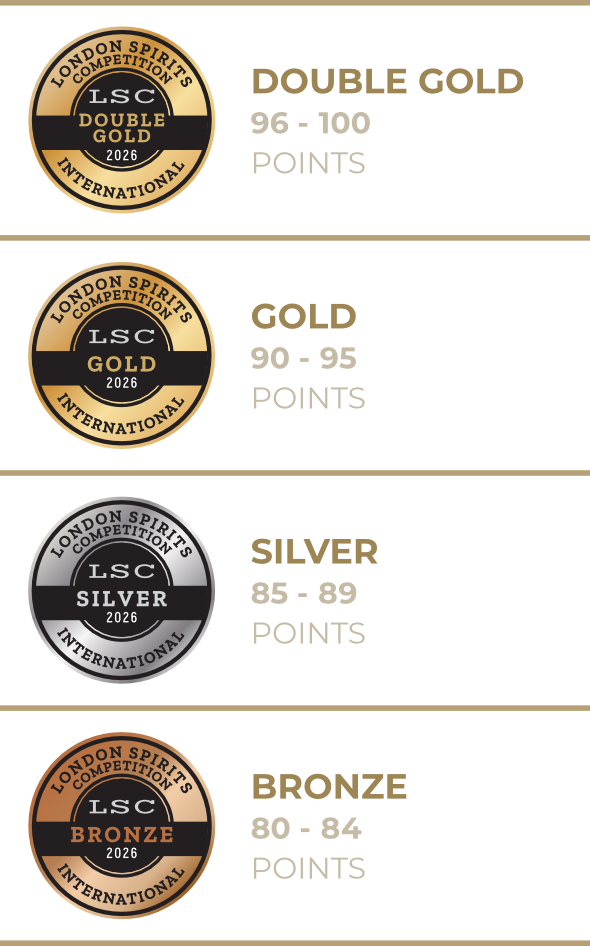
Walk down any spirits aisle and you'll notice a pattern: gold stickers, embossed medals, bold "double gold" stamps crowding bottle after bottle. It's not vanity. Behind every award claim is a deliberate commercial strategy — one that touches everything from shelf placement to international expansion.
Here's how it actually works.
A consumer standing in front of a wall of whisky, gin, or tequila options has neither the time nor the expertise to evaluate each bottle on its own merits. An award medal short-circuits that uncertainty. It signals that someone qualified has already done the tasting and made a judgment — and that judgment was favorable.
For shoppers exploring outside their usual brands, that small emblem can be the difference between a confident pick and a put-it-back moment.
Awards don't just reassure consumers — they give retailers a reason to talk about a product. Shelf talkers, in-store display features, and online product pages all become easier to write when there's a credible accolade to anchor the copy. A medal transforms a product description from a list of tasting notes into a story with external validation attached.
For spirits brands, earning that award can be the difference between a flat shelf presence and a featured placement.
The most effective spirits brands don't treat awards as one-off announcements. They weave them into the fabric of their identity. Competition results show up in press materials, appear in distributor decks, and get referenced years after the fact. Recognition from respected competitions — the London Spirits Competition being one of the industry's more prominent examples — carries ongoing weight precisely because it's tied to professional, expert evaluation rather than a popularity contest.
Over time, a pattern of recognition builds a brand narrative that's hard to manufacture any other way.
Perhaps the least-discussed but most strategically valuable use of awards is in export. When a brand is unknown in a new country, importers and distributors have very little to go on. An award from a credible international competition provides a neutral, third-party endorsement that travels well across language and cultural barriers.
It won't close a distribution deal on its own — but it opens the conversation.
Savvy brands know that an award only creates value if it's activated. That means updating packaging with the medal, issuing press releases, running social media campaigns around the result, and working recognition into trade outreach and pitch materials. A competition result that sits in an inbox generates nothing.
When treated as a marketing asset rather than a participation trophy, however, an award can simultaneously reinforce brand positioning, attract retail buyers, and give consumers the nudge they need to try something new. In a market this crowded, that combination is worth its weight in gold — even the sticker kind.
The 2027 London Spirits Competition gives every entrant greater feedback, transparency and valuable commercial insight. Entrants will receive an expanded score breakdown, constructive feedback on how to improve their spirits, guidance on how to market and sell them, the names of the judges who tasted their entries, final feedback from the Head Judge and a Buyer Market Intelligence Report.
Enter your spirits in the 10th edition of the London Spirits Competition.