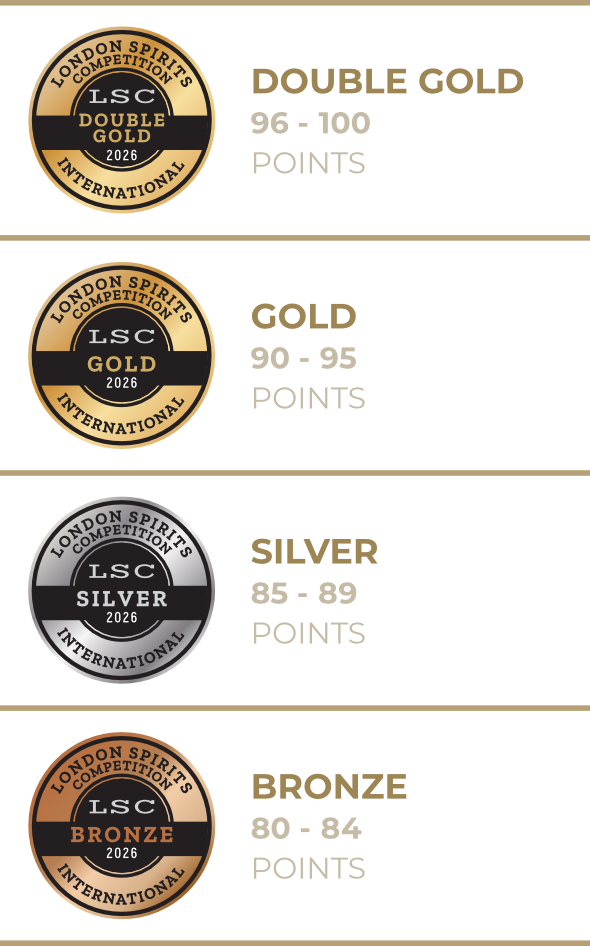
Early Deadline
30 November 2026
Judging
Date
23 & 24 March 2027
Winners Announced
22 April 2027
30 November 2026
23 & 24 March 2027
22 April 2027
Every year, spirits producers around the world enter dozens of competitions, chasing medals they hope will open doors with distributors, impress buyers, and reassure consumers. But with so many competitions on the calendar, the more important question isn't whether to enter, it's which competitions are actually worth your entry fee.
The answer isn't a single name. It's a set of criteria.
The most respected spirits competitions tend to share a few defining characteristics, and they're worth understanding before you commit.
The first is the quality of the judging panel. Competitions judged by working industry professionals — spirits buyers, importers, bartenders, and hospitality professionals — carry more weight than those relying on generalist panels or media personalities. The closer the judges are to actual purchasing decisions, the more relevant their verdict is to your commercial goals.
The second is process transparency. Blind tasting, clearly defined scoring criteria, and structured evaluation methodology all signal that results reflect genuine product quality rather than brand familiarity or marketing spend. If a competition can't clearly explain how it judges, that's worth noting.
The third is what happens after you win. Industry visibility through media coverage, promotional support, and meaningful marketing materials transforms a medal into a business asset. Recognition that no one outside the competition's own website ever sees has limited commercial value.
There's a meaningful distinction between competitions that evaluate only what's in the glass and those that take a broader view of how a spirit performs in the real market.
Most competitions focus primarily on blind tasting and flavour evaluation. While quality is essential, real purchasing decisions in the beverage industry are influenced by more than taste alone. Retailers, distributors, and bartenders consider pricing and packaging when deciding which products to stock — and the best competitions reflect that reality.
The London Spirits Competition scores entries across three criteria — quality, value, and packaging — because those are the factors that actually drive purchasing decisions at the trade and retail level. A spirit that scores beautifully on taste but fails on value for money or shelf presence may not succeed commercially, and competitions that acknowledge this give producers more actionable feedback. Understanding a competition's evaluation framework helps you interpret what a win actually means — and how to communicate it to buyers and consumers.
The credibility of any competition ultimately rests on its judging panel. The London Spirits Competition draws judges from across the beverage trade: spirits buyers, bar managers, bartenders, importers, distributors, and hospitality beverage directors — professionals who are actively involved in purchasing and recommending spirits in their own businesses.
Because these judges operate at the sharp end of real market decisions, their evaluations reflect genuine commercial expectations rather than abstract assessments of liquid quality. For distributors and retail buyers reviewing an unfamiliar brand, a medal endorsed by their industry peers carries considerably more weight than one awarded by a generalist panel. In many cases, the buyers a producer is trying to reach are familiar with — or directly connected to — the people doing the judging.
For distilleries with export ambitions, competition strategy becomes even more deliberate. A medal from a well-regarded international competition travels in a way that domestic recognition often doesn't. It provides a neutral, third-party endorsement that importers and distributors in unfamiliar markets can immediately understand and trust.
The London Spirits Competition attracts entries from distilleries across the globe, from small craft producers making their first foray into international recognition to established brands seeking validation in new markets. For newer brands especially, appearing alongside established names in the same judged field — and earning recognition on those terms — can be the credibility bridge that gets a distributor to take a meeting or a retailer to give shelf space. The product might be exceptional, but without supporting evidence, an unknown label is a harder sell.
Rather than searching for one definitive best competition, producers are better served by asking which competitions align with their specific business objectives.
A craft distillery building a bartender-focused brand should prioritise competitions with strong hospitality industry representation on the panel. A brand targeting export growth should look for competitions with international judging panels and strong trade media reach. A producer seeking retail placement should consider whether a competition's marketing materials translate effectively to consumer-facing channels.
The most valuable competition is, ultimately, the one whose winners are noticed by the people you're trying to reach.
Entered thoughtfully, competitions are one of the most cost-effective marketing tools available to a spirits brand. They provide independent validation, generate usable marketing assets, and put your product in front of professionals who influence where bottles end up being sold and poured.
Entered without strategy, they're an expense with uncertain returns. The distilleries getting the most value from competitions are those that treat entry selection as a business decision — one that starts with knowing exactly what kind of recognition they're trying to earn, and who they need to earn it from.
The 2027 London Spirits Competition gives every entrant greater feedback, transparency and valuable commercial insight. Entrants will receive an expanded score breakdown, constructive feedback on how to improve their spirits, guidance on how to market and sell them, the names of the judges who tasted their entries, final feedback from the Head Judge and a Buyer Market Intelligence Report.
Enter your spirits in the 10th edition of the London Spirits Competition.