Early Deadline
30 November 2026
Judging
Date
23 & 24 March 2027
Winners Announced
22 April 2027
30 November 2026
23 & 24 March 2027
22 April 2027


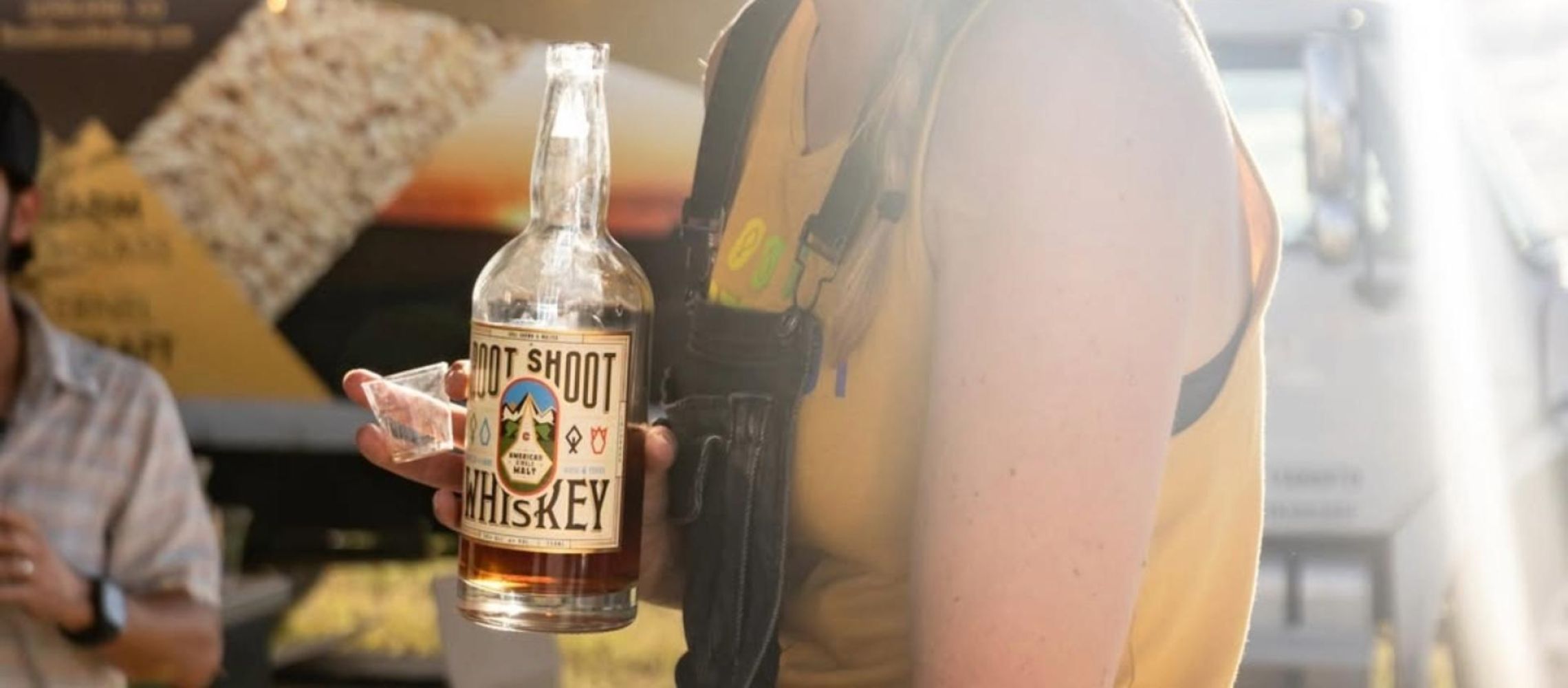
For decades, grain was treated as a commodity in American whiskey production — valued largely for yield, efficiency, and consistency rather than flavour, agricultural identity, or provenance.
Root Shoot Malting has spent the last decade challenging that mindset.
Based in Colorado and rooted in nearly a century of family farming, the company has become one of the clearest examples of how agricultural stewardship, malt expertise, and full supply chain control can redefine modern whiskey production. What began as an effort to diversify and future-proof a fifth-generation family farm has evolved into one of the most compelling grain-to-glass whiskey stories in the United States.
That vision received extraordinary international recognition at the 2026 London Spirits Competition, where Root Shoot American Single Malt 4-Year Bottled-in-Bond achieved one of the competition’s standout performances. The whiskey earned an exceptional 97 points alongside Double Gold Medal honours, while also securing Whisky of the Year, American Single Malt Whiskey of the Year, and Spirit of the Year – United States of America.
For Root Shoot, however, the award represents more than technical achievement. It validates a philosophy built around the idea that great whiskey begins not in the distillery, but in the soil.
Root Shoot’s story starts long before whiskey entered the picture.
Founder Todd Olander represents the fifth generation farming the family property in Colorado, with Olander Farms approaching its 100th anniversary this year. For decades, the farm supplied barley to major brewing companies including Coors and Budweiser, operating within a commodity system focused largely on scale and efficiency.
But over time, that model began to feel increasingly limiting.
The creation of Root Shoot Malting in 2016 marked a turning point — a move toward adding value directly at origin while gaining greater creative and agricultural control over the grain itself. Instead of growing barley solely for industrial brewing specifications, the company began exploring varietal expression, malt functionality, flavour development, and the nuanced relationship between agriculture and finished spirits.
Whiskey emerged naturally from that evolution.
As the team experimented with barley varieties, specialty malts, kilning levels, and regenerative farming techniques, they became increasingly convinced that the quality of the grain being produced deserved direct consumer expression. The whiskey project became both a showcase for the farm and a way to communicate the deeper story behind the grain itself.
Unlike many brands using the term “grain-to-glass” loosely as a marketing concept, Root Shoot’s involvement genuinely extends through every stage of production. The company selects the seed varieties, plants the crops, manages irrigation, oversees harvesting, controls the malting process, develops the mash bills, and works directly with distilling partners to shape the final spirit.
That level of vertical integration gives Root Shoot an unusual degree of control over flavour and consistency — but also a far deeper understanding of how agricultural decisions influence the final whiskey.
For Root Shoot, terroir is not a romantic abstraction. It is measurable, agricultural, and central to the identity of the whiskey itself.
Colorado’s climate, elevation, and growing conditions create grain with distinctive functionality and flavour characteristics, while the company’s malting expertise allows those traits to be amplified rather than standardised away.
Because Root Shoot operates its own malt house, the team is able to experiment with specialty malts, kilning profiles, and grain bills in ways that most distilleries sourcing commercial malt cannot. Those decisions play a major role in shaping the flavour architecture of the final spirit.
The award-winning 4-Year Bottled-in-Bond American Single Malt demonstrates that philosophy clearly. Built using a carefully constructed malt bill incorporating specialty malt components alongside estate-grown barley, the whiskey was intentionally designed to bridge the gap between American bourbon familiarity and single malt complexity.
The result is a whiskey with vibrant green and tropical fruit notes layered against orchard fruit sweetness, resinous spice, toasted coconut, and saline structure — a profile that reflects both technical precision and agricultural individuality.
Importantly, Root Shoot has resisted the temptation to release immature spirit simply to accelerate market presence. Rather than launching with young whiskey or clear spirits, the company waited until its bottled-in-bond whiskey reached four years of age before entering the market.
That patience reflects a long-term philosophy increasingly rare within modern craft spirits.
While sustainability has become a widely used industry term, Root Shoot approaches regenerative agriculture not as branding, but as operational necessity.
Colorado’s increasingly unpredictable climate — including prolonged drought conditions, inconsistent precipitation, and shifting seasonal patterns — has forced the farm to rethink traditional agricultural practices. In response, Root Shoot has spent years implementing regenerative systems designed to improve soil resilience, water retention, biodiversity, and long-term farm viability.
The company operates under six key regenerative principles, including minimal soil disturbance through no-till farming, crop diversity, permanent ground cover, livestock integration, and maintaining living root systems as many days of the year as possible.
Cover crops play a particularly important role within the system, helping improve microbial activity, reduce erosion, retain moisture, and increase carbon sequestration. Grazing cattle are integrated into the cycle to further strengthen soil health naturally.
Those efforts have now been independently validated through Regenified Tier 3 certification — a significant achievement within a five-tier system designed to verify measurable regenerative outcomes rather than marketing claims. Root Shoot was onboarded directly at Tier 3 during its first certification process, reflecting years of prior regenerative work already underway before formal assessment began.
For the team, certification was important not simply for recognition, but for accountability.
The company has also participated in projects measuring soil organic carbon sequestration, demonstrating that its farming operations are capable of sequestering more carbon than they emit during production. For an industry increasingly focused on supply chain emissions and environmental accountability, that has significant implications.
But perhaps most importantly, Root Shoot views regenerative farming as directly connected to whiskey quality itself.
Healthier soil produces healthier grain. Healthier grain produces better malt. Better malt produces more expressive whiskey.
Root Shoot’s decision to release its flagship whiskey as a Bottled-in-Bond product was both philosophical and practical.
The designation requires production within a single distillation season, prohibiting blending across vintages or age statements. For Root Shoot, that requirement aligned perfectly with the agricultural identity of the project.
Because every bottling reflects a single growing season, a single harvest, and a single year of malt production, the whiskey captures genuine agricultural variation from year to year — reinforcing the concept of terroir within American single malt.
At the same time, the bottled-in-bond standard provides consumers with a clear marker of production integrity and maturity, while the mandated 100-proof bottling strength happened to suit the spirit stylistically.
Consistency, meanwhile, is achieved not by removing variation entirely, but through careful blending and deep familiarity with the grain itself. The company continues experimenting with different malt bills and specialty malt inclusions while maintaining broader production variables — such as oak profile and fermentation approach — relatively stable.
The result is a whiskey that remains recognisably Root Shoot while still reflecting the realities of agriculture and vintage variation.
Although Root Shoot whiskey has become increasingly recognised internationally, the company sees the spirit brand as part of a much larger mission.
The farm and malt house were built at a scale designed to support far more than a single whiskey label. Today, Root Shoot supplies malt to numerous craft producers across Colorado and beyond, helping expand the influence of regenerative agriculture throughout the wider brewing and distilling ecosystem.
Collaborations form an important part of that strategy. The company regularly partners with brewers and distillers using its malt, often creating projects where whisky barrels are cycled through breweries before being reused for additional whiskey maturation — reinforcing both agricultural provenance and collaborative craftsmanship.
Those partnerships are driven less by commercial opportunism than by shared philosophy and long-term relationships within Colorado’s drinks community.
At the centre of everything remains the farm itself.
Root Shoot’s broader initiative — “Saving Farms One Whiskey at a Time” — reflects the company’s belief that premium spirits can become vehicles for agricultural resilience, environmental improvement, and rural economic sustainability rather than simply luxury consumer products.
As American Single Malt continues its rise globally, Root Shoot is positioning itself not just as a whiskey producer, but as one of the clearest examples of where the category may be heading next: toward provenance, transparency, agriculture, and genuine grain identity.
And if the results from London are any indication, the future of American whiskey may begin much closer to the soil than many producers ever realised.
The 2027 London Spirits Competition gives every entrant greater feedback, transparency and valuable commercial insight. Entrants will receive an expanded score breakdown, constructive feedback on how to improve their spirits, guidance on how to market and sell them, the names of the judges who tasted their entries, final feedback from the Head Judge and a Buyer Market Intelligence Report.
Enter your spirits in the 10th edition of the London Spirits Competition.