Early Deadline
30 November 2026
Judging
Date
23 & 24 March 2027
Winners Announced
22 April 2027
30 November 2026
23 & 24 March 2027
22 April 2027
There is something refreshingly unpolished about Tasmaniac Distillers — and that is precisely the point.
Founded by “a trio of country-living, folk-singing, and banjo-stringing mates” in Cygnet, southern Tasmania, the distillery has built its identity around a philosophy that feels increasingly rare in modern spirits: authenticity without performance. Tasmaniac is not trying to imitate the sleek minimalism of urban craft distilling, nor is it interested in producing safe, category-conforming spirits designed to disappear into crowded back bars.
Instead, the distillery has chosen to go “left of centre,” creating spirits that channel the untamed personality of Tasmania itself — rugged coastlines, wild botanicals, eccentric local culture, and all.
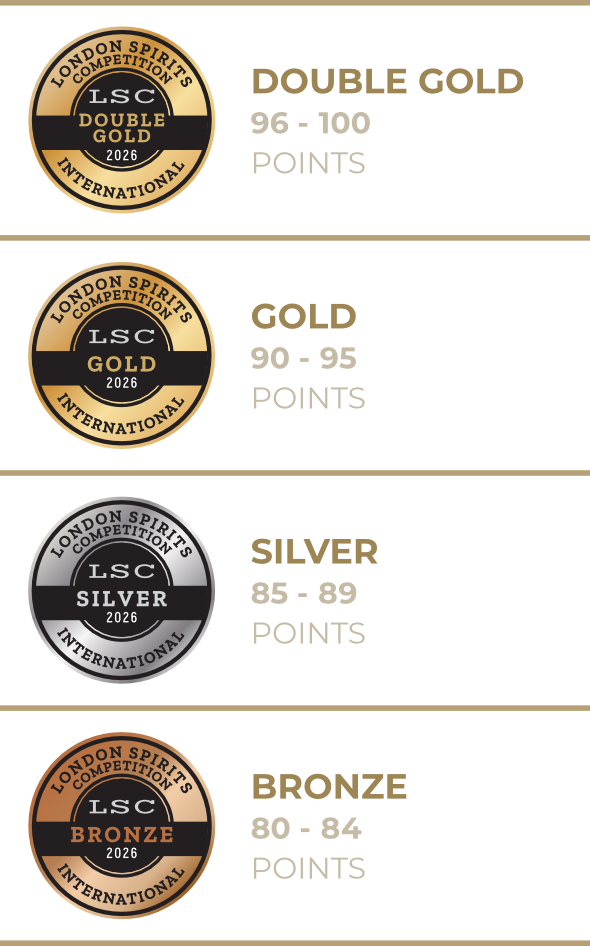
That spirit of rebellion recently gained international recognition at the 2026 London Spirits Competition, where Tasmaniac’s Antarctic Aquavit secured a Gold Medal with 90 points, while Trademark Gin earned a Bronze Medal. For a small distillery operating at the southern edge of the world, the awards signal more than product quality; they validate an entirely different approach to craft spirits production.
At the heart of Tasmaniac’s identity is the Huon Valley, a region renowned across Australia for its pristine produce and cool-climate agriculture. The distillery’s founders speak about the area less like a production base and more like a living pantry. Within a short drive are world-class strawberries, sprawling apple orchards, native kunzea bushes, wild fennel, cherries, pepperberries, and countless ingredients that find their way into the company’s spirits.
The connection to place is not superficial branding. It directly shapes how Tasmaniac develops flavour.
“We don’t see the point in producing just another dry gin or a basic aquavit,” explains co-founder and distiller Adam, whose years living in Norway heavily influenced the distillery’s creative direction. Instead, the team begins with the traditional foundations of a spirit category — juniper for gin, caraway for aquavit — before layering in botanicals that communicate the story of Tasmania.
That philosophy is perhaps best expressed through Antarctic Aquavit, which Tasmaniac proudly describes as the southernmost-produced aquavit in the world.
While aquavit remains a relatively niche category outside Scandinavia, Tasmaniac has embraced the spirit with remarkable confidence. Their interpretation pays homage to Norway’s bold caraway-forward style while introducing unmistakably Tasmanian characteristics through native pepperberry, wild fennel flower, kunzea, and local honey. The result is not simply a regional variation of aquavit but a reinterpretation of what the category can become when transplanted into a radically different landscape.
The judges at the London Spirits Competition described the spirit as “bold” and “spice-forward,” highlighting intense notes of caraway, cumin, cardamom, smoky BBQ character, and lingering menthol freshness. Yet beyond tasting notes, what makes Antarctic Aquavit compelling is its positioning: it occupies a unique space between heritage spirit and contemporary craft experimentation.
For the trade, that distinction matters.
As consumers increasingly seek products with provenance, authenticity, and narrative depth, Tasmaniac offers bartenders and retailers something genuinely differentiated. Aquavit itself remains underrepresented in many export markets, particularly compared to gin, meaning Tasmaniac’s award-winning expression gives venues an opportunity to introduce consumers to a category with strong storytelling potential and versatile cocktail applications.
Tasmaniac’s Scandinavian influence extends beyond aquavit alone. The distillery embraces a distinctly Nordic philosophy of minimalism in production — letting raw ingredients speak clearly rather than masking them with excessive manipulation. But the mood surrounding the brand is pure Tasmania: relaxed, eccentric, and proudly rough around the edges.
That duality flows throughout the wider portfolio.
Trademark Gin, another London Spirits Competition medallist, captures the distillery’s hyper-local approach particularly well. Rather than relying solely on traditional gin botanicals, the spirit incorporates a three-stage distillation of Huon Valley apples alongside juniper, pepperberries, citrus, and currants. Tasmania is often referred to as “The Apple Isle,” and the gin uses that regional identity as a central flavour component rather than a supporting accent.
Elsewhere, Tasmaniac continues to blur category lines in creative ways. Their Strawberry Apero takes inspiration from classic European aperitivo culture while showcasing fresh Tasmanian strawberries. Cowboy Cherry Gin transforms rejected Huon Valley cherries — fruit discarded for cosmetic imperfections rather than flavour — into a bright, savoury, juniper-led spirit with genuine cocktail versatility. Meanwhile, the Coffee Liqueur combines Hobart cold brew coffee with amaro-style botanicals, roasted hazelnuts, citrus, and cherries, delivering a more layered and bittersweet alternative to conventional coffee liqueurs.
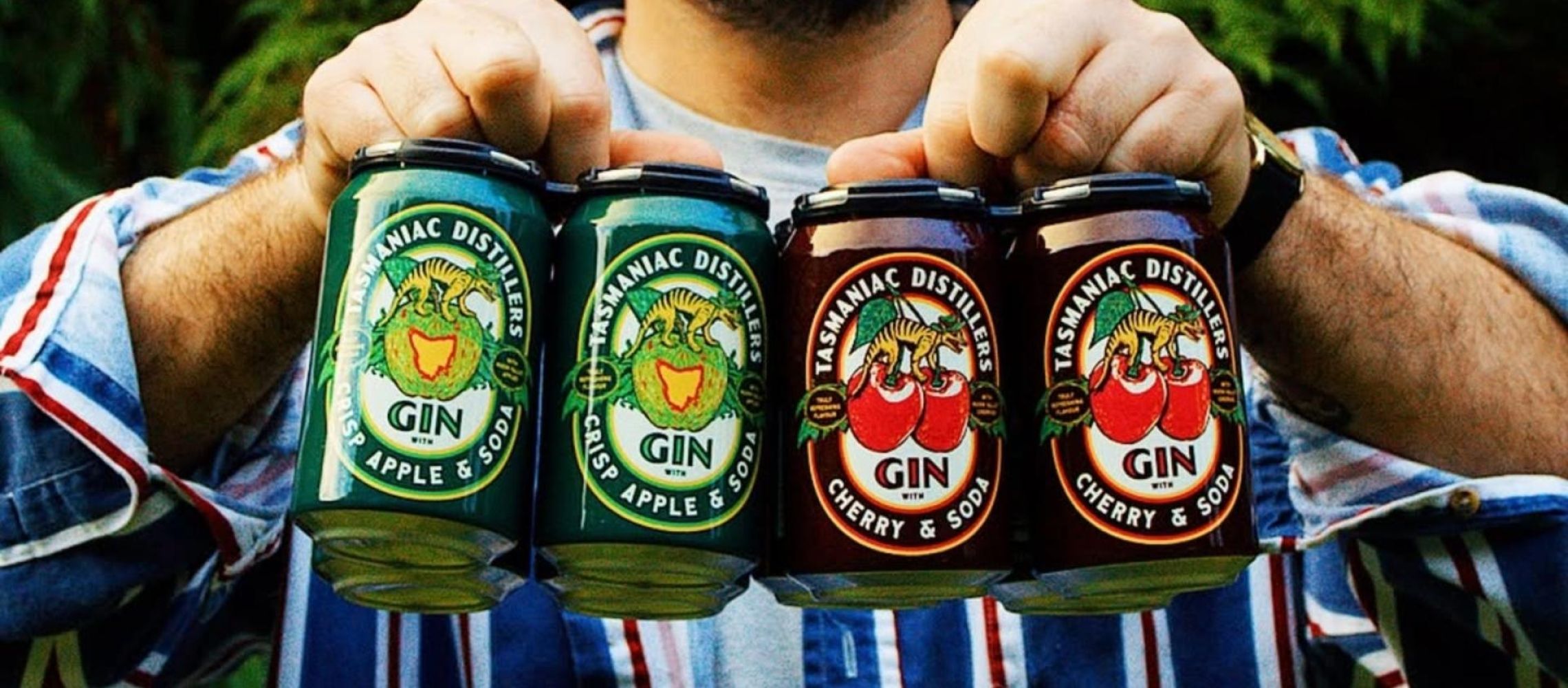
Even the distillery’s RTD range retains a strong sense of place. Tasmaniac Tinny, a canned mix of gin, fresh Huon Valley apple juice, and soda, speaks directly to the growing demand for premium ready-to-drink products while remaining rooted in local agricultural identity.
Yet perhaps the most interesting aspect of Tasmaniac Distillers is the tension between precision and unpredictability.
On one hand, the distillery takes quality control seriously. Detailed record-keeping, rigorous weighing procedures, small-batch trials, and continuous R&D form the backbone of production. New ideas are tested through experimental runs on a 5-litre still, with constant refinement shaping each release over time.
On the other hand, the founders openly embrace variation as part of craft distilling’s charm.
“We are not making processed sliced cheese,” Adam jokes. “We are making craft spirits using real local fruit and foraged native ingredients.”
That mindset resonates strongly in today’s premium spirits landscape, where consumers increasingly value products that feel alive, seasonal, and connected to real agriculture rather than engineered consistency.
The personality of the brand is equally important.
Tasmaniac does not hide behind polished corporate language or manufactured luxury cues. The founders describe the brand in one phrase: “Yeehaw! It’s wild.” Alternative country music plays through bottling sessions and festival activations. The visual identity embraces Tasmania’s rough coastal energy and outsider spirit. At Tasmania’s celebrated Dark Mofo festival, Tasmaniac’s cocktail stall has become an extension of the brand’s personality — energetic, unconventional, and community-driven.
For international buyers, Tasmaniac Distillers represents something increasingly valuable in the premium spirits space: a producer with genuine regional identity, a strong sense of humour, and a portfolio capable of delivering both commercial appeal and category distinction.
In an industry saturated with carefully manufactured craft narratives, Tasmaniac feels refreshingly real.
Wild, yes — but intentionally so.
The 2027 London Spirits Competition gives every entrant greater feedback, transparency and valuable commercial insight. Entrants will receive an expanded score breakdown, constructive feedback on how to improve their spirits, guidance on how to market and sell them, the names of the judges who tasted their entries, final feedback from the Head Judge and a Buyer Market Intelligence Report.
Enter your spirits in the 10th edition of the London Spirits Competition.