Early Deadline
30 November 2026
Judging
Date
23 & 24 March 2027
Winners Announced
22 April 2027
30 November 2026
23 & 24 March 2027
22 April 2027

Before a bar opens, almost everything exists in theory. The concept has been developed, the drinks have been tested, and the operating procedures have been written. But the real test begins when the first guests walk through the door.
For Davide Sinibaldi, Assistant Bar Manager at The Spy Bar at Raffles London at The OWO, the challenge is turning ambition into something that works consistently in live service. With experience across luxury hotels, cocktail bars and pre-opening operations, Sinibaldi has learned that the most impressive idea is not always the most effective one.
At The Spy Bar, the setting and history provide a distinctive foundation, but the drinks still need to taste excellent, make operational sense, and respond to what guests actually want. Here, Sinibaldi discusses building a bar concept from scratch, creating menus that work under pressure, developing meaningful relationships with spirits producers, and understanding what modern luxury guests expect.
The hardest part is balancing what looks great on paper with the reality of live service. Before opening, you can spend weeks developing the concept, the drinks, SOPs, and the general operational structure, but you never truly know how a guest will interact with the space until you unlock the doors.
For me, it’s about being ambitious without losing practicality. A cocktail might look brilliant in theory, but if it takes too long to build, relies on too many variables, or doesn't fit naturally into the rhythm of the bar, it won't work at scale. Pre-opening is really about testing, challenging your own assumptions, and staying flexible enough to adapt once real guests start walking through the door.
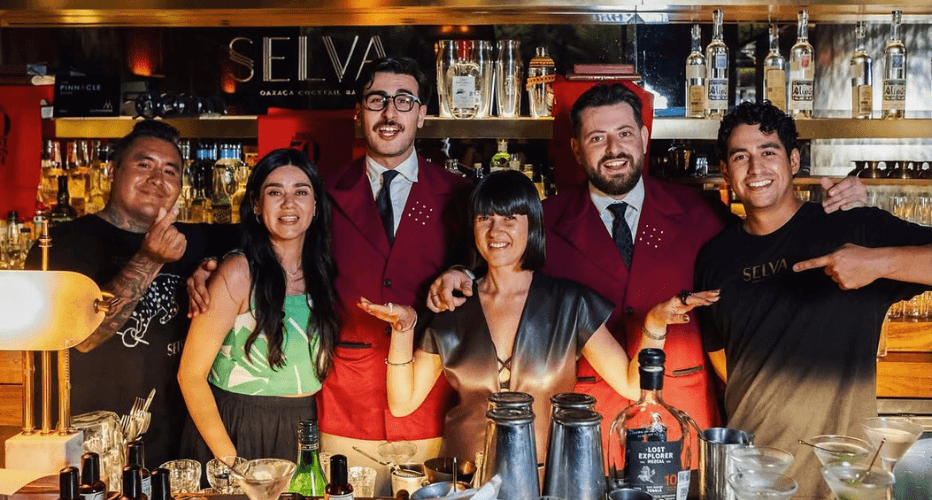
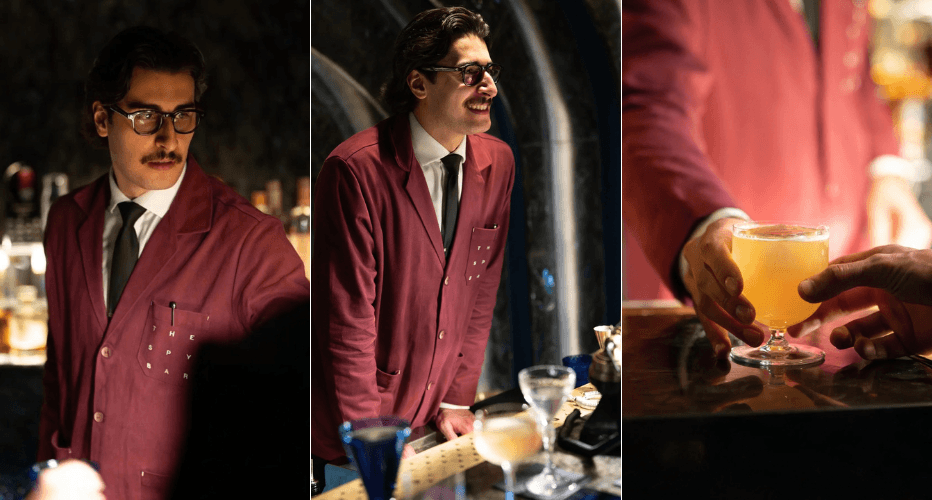
Image: The Spy Bar Team.
The story should inform the drinks, not dictate them. The OWO's history and espionage connection give us a fantastic foundation at The Spy Bar, but that doesn't mean every cocktail needs a dramatic gimmick or an obvious espionage reference. I prefer the narrative to come through via a specific ingredient, a technique, a glassware choice, or even just the overall mood a drink creates.
I look for three things: flavour, clear identity, and operational practicality.
First, the drink has to taste great and earn its spot. Second, it needs to bring something distinct to the menu that isn't already covered by another cocktail. Lastly, from an operational perspective: Can we execute it consistently when the bar is packed? Does the team understand it and feel confident explaining it? Can we maintain the quality hundreds of times without compromising the guest experience?
I’ve learnt over time that the drinks you get most emotionally attached to as a bartender aren't always the ones that belong on the guest menu. A good menu isn't just a collection of your best ideas. It's a collection of drinks that work together and that the whole team can deliver consistently.
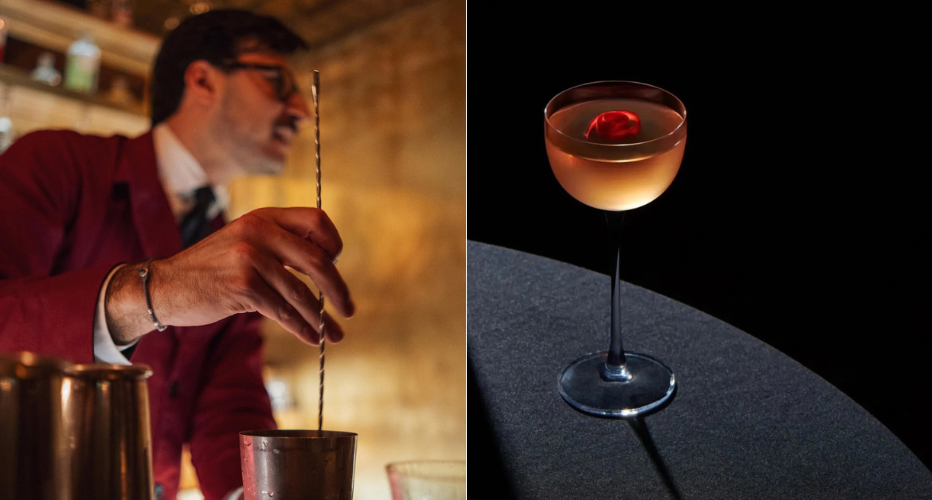
Image: Double O Seven - A modern twist on the Martini, which incorporates both global and British influences.
It’s all about creating different levels of engagement rather than completely different experiences.
A destination guest might want to understand the story, discover a venue they haven't experienced before, and have a Vesper Martini because of the James Bond connection. While a regular might just want to be looked after, have a great drink, and enjoy his moment.
Both should be possible within the same programme.
The menu needs to have enough personality to communicate what the bar is about, but it shouldn't make the guest feel that they have to participate in the concept.
If someone wants to explore, we should be able to take them on that journey. If someone just wants a great drink and good service, that should be equally valid.
Bartenders naturally get excited by complexity. Guests don't necessarily do.
As bartenders, we enjoy discovering a new technique, an unusual ingredient, or a complicated preparation. But the guest ultimately experiences the drink as one thing: does it taste good, and did I enjoy drinking it?
I've learned to separate the technical challenge from the guest experience.
There is nothing wrong with a complicated cocktail, but the complexity should have a purpose. If you are using a specific technique for a prep, there should be a reason for doing it.
The best technical cocktails, in my opinion, are the ones where the guest doesn't notice the effort behind the scenes; they just think: “that's really good”.
A good product is obviously the starting point, but the commercial relationship is much more important than a single tasting. I appreciate producers who take the time to understand how bartenders actually work and what a bar needs. That could mean education, supporting guest shifts or events, or being available when you need technical information.
I also think authenticity matters. If a brand is only interested in getting its bottle onto the back bar, you can feel that quite quickly.
The producers/ambassador I want to continue working with are the ones who see the relationship as a long-term partnership rather than a sales opportunity.
Working in a five-star hotel in London, I regularly meet guests who travel more. They have access to more information, and many arrive already knowing a lot about cocktails, spirits and the bars they want to visit. More generally, I think guests are much more informed today than they were in the past, and I see that as a positive thing.
But I think what has changed even more is what guests expect from the experience. They are looking for something that feels personal and genuine, rather than simply impressive.
In luxury hospitality, there can sometimes be a temptation to overengineer the experience to add more theatre, more storytelling, or more complexity. But luxury can also be about simplicity: remembering a guest's preference, reading the table correctly, making a classic cocktail exceptionally well, or understanding the boundaries of the experience and knowing how to adapt your approach accordingly.

There isn't one particular thing I would recommend, as I think everyone has their own preferences when it comes to what they listen to, watch, or read. Personally, I've been trying to keep a balance between things directly related to bars and hospitality and things completely outside of it.
At the moment, I'm listening to quite a lot of podcast interviews with professionals from very different industries. I find it interesting to understand how people think, particularly leaders and people who have built something themselves. Even when the subject has nothing to do with hospitality, you can often take something from their mindset and apply it to your own life or work.
I'm also quite curious by nature, so I enjoy understanding what is happening outside of my own day-to-day bubble. I think that is valuable not only personally, but also professionally. The more you know about the world around you, the more genuine conversations you can have with guests.
I've also been spending quite a bit of time learning more about wine recently. I find that studying another part of the drinks world changes the way you think about flavour, balance and ingredients.
Then, I enjoy simply going out and exploring different parts of London, visiting new places, bars and restaurants, and seeing what other people are doing. I think sometimes you learn as much from experiencing something as a guest as you do from analysing it as a bartender.
In conversation with Malvika Patel, Editor and VP, Beverage Trade Network
Also Read:
Why Great Bars Need Systems Before They Need More Creativity
Bring the Fun Back: Emilia Wrelton on Hospitality, Learning and What Guests Actually Want
The Cocktails Dominating London Bars This Summer
The 2027 London Spirits Competition gives every entrant greater feedback, transparency and valuable commercial insight. Entrants will receive an expanded score breakdown, constructive feedback on how to improve their spirits, guidance on how to market and sell them, the names of the judges who tasted their entries, final feedback from the Head Judge and a Buyer Market Intelligence Report.
Enter your spirits in the 10th edition of the London Spirits Competition.